Module 3: Insurance

Learning Outcomes
After completing this module, you will learn about:
- Different types of commercial insurances available for your business
- Ins and outs of general commercial liability insurance coverage
- Steps involved in tailoring your insurance package
Basics of business insurance
Commercial insurance for your small business helps protect a business’s assets, property, and income. Having insurance is vital for managing business risk and protecting one’s business from financial, legal, or other claims in the case of an accident, lawsuit, disaster, cyber risk or other unexpected occurrences.
Types of commercial insurance
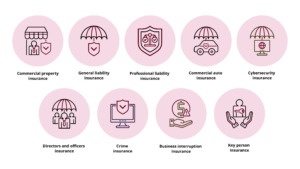
As a small Canadian business, it is important to understand all of the common commercial insurance policies available to you:
- Commercial property insurance: Protects you from common risks you expect to face in your day-to-day business operations, including third-party property damage or bodily injuries resulting from negligence. Useful for: all general businesses
- General liability insurance: Protects you from being held liable for damage caused by your product or employees, or injuries at your office, storefront, or even place of business. Useful for: all general businesses
- Professional liability insurance: Protects you from negative consequences (not negligent) of your professional service or advice. For example, if as a consultant you give business advice to your client which downturns their business and if they hold you responsible, professional liability insurance covers the costs of lawsuit and damages. Useful for: advisory firms, businesses in industries like accounting, law, consulting, engineering, etc.
- Commercial auto insurance: Protects your business’s vehicles from damages and costs resulting from accidents. Useful for: Businesses in transportation, businesses owning multiple vehicles.
- Cybersecurity insurance: Verizon’s latest data breach report said that small businesses are the target of 43% of cyber-attacks. This insurance option protects businesses from risks of costly containment and repair expenses and lawsuits from third parties resulting from business system breaches and hacking. Useful for: all general businesses
- Directors and officers insurance: Protects Directors & Officers (D&O) from personal financial loss that may result from allegations and lawsuits of wrongful acts or mismanagement carried out in their appointed capacity. Useful for: Any organization governed by a board of directors, from nonprofits to commercial enterprises, needs comprehensive D&O coverage, as the individuals who serve are increasingly held accountable for their actions and/or inactions.
- Crime insurance: Protect you against any financial losses that result from an employee who’s less than honest. Based on the nature of your business, you can cover yourself for several possibilities including losses from property theft, forgery, computer crime, and more. Useful for: all general businesses
- Business interruption insurance: Helps make up for lost revenue from losses in the event that business is halted due to direct physical loss or damage such as fire or a natural disaster, like the money you lose while cleaning up after a flood or storm, or getting your network up and running. Useful for: all general businesses
- Key person insurance: This covers the cost of losing a person who is vital to the business, and due to unforeseen circumstances of an accident or illness, such as the costs to hire and train someone new. Useful for: Small businesses that employ people with highly specialized skills and training.
Commercial General Liability Insurance Coverage 101
Commercial General Liability Insurance, also known as CGL, is the most basic form of business insurance. It protects your business from financial loss should you be liable for property damage or personal and advertising injury caused by your services, business operations, or your employees.
Typically a commercial general liability insurance coverage includes:
- Bodily Injury Liability – Provides protection against losses from the legal liability of insurers for bodily injury which means bodily harm, sickness, or disease, including resulting death that results from the operations of your business. For example, a customer slips in your store/ office premises and breaks their back.
- Property Damage Liability – Provides protection against losses from the legal liability of insurers for property damage to others arising out of any non-professional negligent acts or for liability arising from your premises and business operations. For example, a contractor accidentally damages the building next to the one he or she is working on.
- Products Liability – The liability for bodily injury (BI) or property damage (PD) incurred by a merchant or manufacturer as a consequence of some defect in the product sold or manufactured. For example, a customer becomes sick after consuming your product.
- Completed Operations – Work of the insured that has been completed as called for in a contract, or work completed at a single job site under a contract involving multiple job sites, or work that has been put to its intended use. For example, a plumber installs a new toilet and it begins to leak and damages the contents of the room below.
- Tenants Legal Liability – Tenant accepts responsibility for the damage they may cause to the building which they rent or lease from a landlord. For example, an asset management company employee leaves a candle burning at their desk overnight which catches fire and burns down the entire office tower.
Tailoring your insurance package
Understanding which kind of business insurance package is most appropriate for your business needs is important and can help you save costs, stay protected, and ensure business continuity. Here are some things to consider: Quick service, convenience, affordable rates, and assistance in claims.
Risk Management
Whatever your business model, you’ll likely face risks that aren’t addressed by a Business Owners’ Policy (BOP) or other standard business insurance coverages.
FAQs in Insurance
- Should I get insurance as a startup?
-
- As you start your business, insurance is often overlooked by many entrepreneurs. However, as you grow and hire people, rent office space, or offer your products and services to customers in a physical location, you expose your business to various risks of claims and lawsuits. Thus, having insurance protection is highly recommended.
- Do I need specialized business insurance?
- The types of risks you face will depend on your business practices. This means certain startups face more liability than others and have different risk management plans. For instance, architects face different liabilities than businesses that offer financial services. But every business that opens its doors to the public faces the potential for lawsuits.
Check out Zen Insurance to get Startup Insurance.
Additional Resources