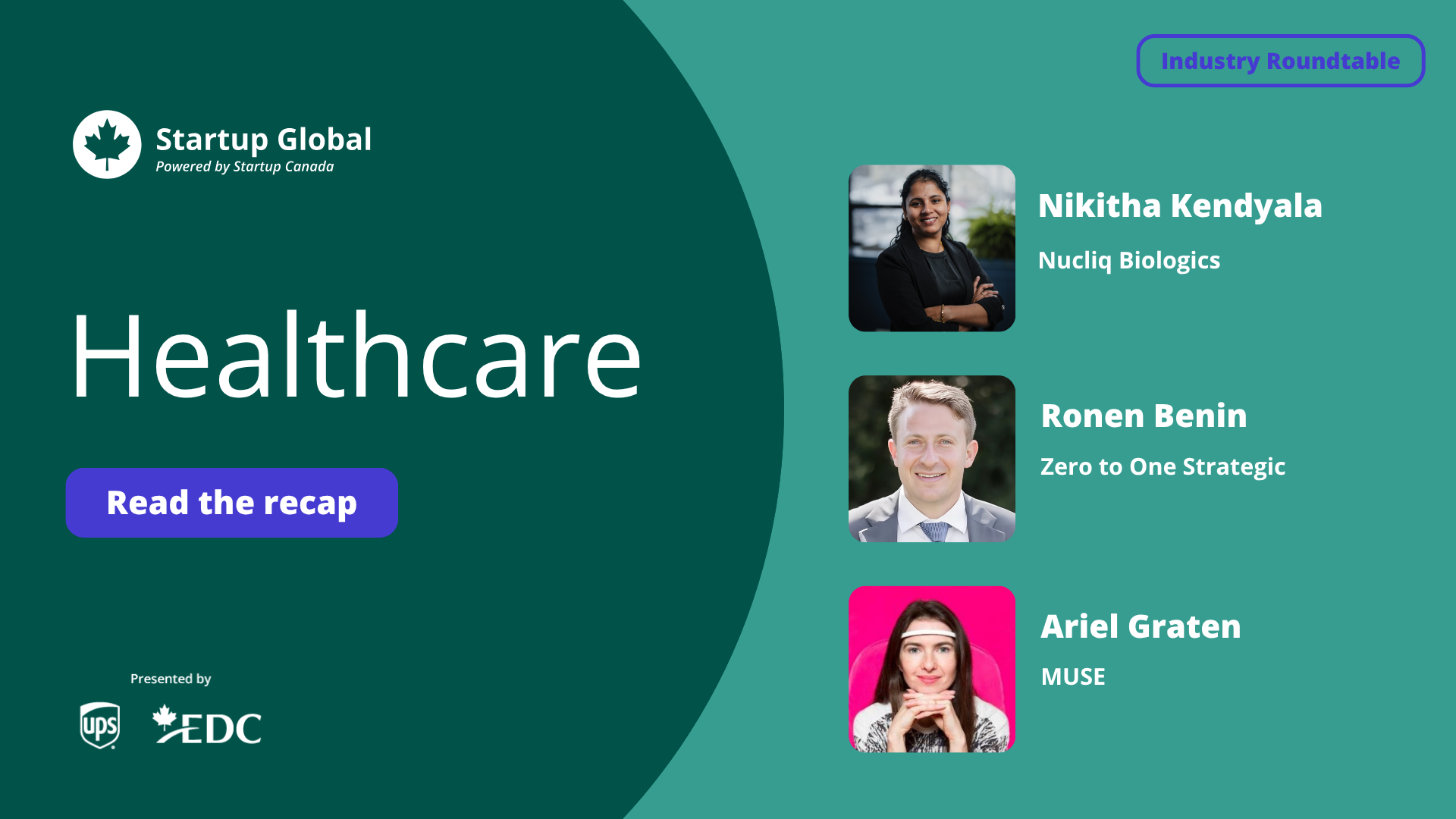
On April 9, 2026, Startup Canada Global, in partnership with Export Development Canada (EDC) and UPS, hosted an Industry Roundtable focused on the unique challenges facing Canadian healthcare startups. Joining us were Ronen Benin of Zero to One Strategic, Nikitha Kendyala of Nucliq Biologics, and Ariel Garten of MUSE. The conversation covered everything from navigating regulatory hurdles to building the kind of investor relationships that actually lead to funding. Here’s a recap of the key takeaways.
Canada Is A Great Place To Start
One consistent theme throughout the session was that being a Canadian company is genuinely an asset in international markets. The country’s reputation opens doors, and the domestic support infrastructure is stronger than many founders realize. Grants, innovation centers, and organizations like CABI offer real resources, not just introductions, for startups working through early development.
Understanding Regulation Before It Becomes a Barrier
Ariel Garten shared how MUSE operated for nine years without FDA clearance by categorizing their device under General Wellness, a legitimate path that many founders overlook. The broader point was that regulatory complexity does not always mean regulatory blockage. Compliance feels like a wall until you find the right door. Understanding how your product is classified, and what that means for your path to market, can save years of time and significant cost.
Fundraising in Healthcare Takes Longer
Healthcare startups rarely generate revenue on a standard timeline, and investors know this. Ronen Benin emphasized that founders need to plan for longer runways and structure their raises accordingly. A common and costly mistake is under-raising in early rounds, which forces premature dilution and weakens your position for the next raise. The advice was to focus on hitting specific milestones rather than simply surviving to a date, and to pursue non-dilutive capital early to preserve equity for when it matters most.
Relationships Are the Real Currency
Nikitha Kendyala spoke about the value of relationships with government funding agencies. In the session, one anecdote described a funding representative tracking down a founder years after a business sale to offer continued support, purely because trust had been built over time. This demonstrated that the mechanics of your business matter less than whether the people holding the capital believe in you and know you.
Do Not Try to Do This Alone
The roundtable closed with a familiar but important reminder: the Canadian startup ecosystem has real support structures, and using them is not a sign of weakness. Pitch competitions, peer networks, and organizations like Startup Canada exist to connect founders with the resources and people they need. The founders who do well are usually the ones who ask for help early and often.
If you found this interesting, you can watch the full roundtable session here.
You can also access our Resource Guide here.
Startup Canada hosts many roundtables and webinars throughout the year as part of their programming. You can see our full schedule and register here.